

CO2 Laser Brisbane | Fractional CO2 Laser and CO2 Laser Resurfacing
CO2 Laser Treatment, Fractional CO2 and Tixel Skin Treatments
Achieve smoother, firmer skin with CO2 laser resurfacing, fractional CO2 laser and Tixel at Pearl Medispa Brisbane—tailored CO2 laser treatment for skin rejuvenation and scar reduction. At Pearl Medispa Brisbane, we offer CO2 laser resurfacing treatments using the Fraxis Duo system. This technology combines the power of a fractional CO2 laser with optional RF microneedling, offering versatile solutions for skin resurfacing and rejuvenation. We have primarily replaced RF microneedling with Tixel—a pure heat technology. Tixel achieves exceptional skin resurfacing results with less discomfort, reduced downtime, and a more affordable price than RF microneedling. Alternating CO2 laser treatment with Tixel (or other regenerative therapies such as Rejuran, collagen biostimulators, or boosters) enables superior outcomes than using CO2 lasers as solo treatments.
CO2 Laser Price
The CO2 laser price for the full face is $990.The price includes complimentary aftercare valued at $255 (including aftercare cream, V-skin masks, and a 3x LED light treatment to speed healing for our CO2 clients). Four treatments are recommended, and a 20% discount is available if you buy a package of four.
Full-face Tixel price including eyes, is $800(currently $599 on special). The newest skin resurfacing product is Tixel, which can treat skin ageing, sun damage, stretch marks, acne scars, and more. In addition, Tixel has the unique advantage of treating the entire eye area safely without eye shields.
Our laser and skin nurse, Christine, offers a free assessment at the onset. She will assess which resurfacing approach is best for you. Please book online or call 07 3350 5447 for a complimentary consultation.
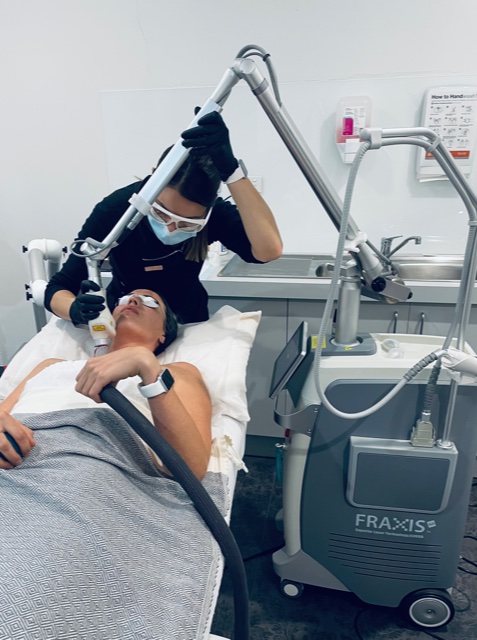

Laser Therapist, Nurse Christine
Christine performs laser and light treatments. She starts with a skin assessment to develop treatment plans to address various cosmetic skin concerns, such as skin tightening, tone brightening for pigmentation and facial redness, laser rejuvenation for photodamage, and picotoning.
Christine collaborates with our cosmetic doctors and facial therapists to obtain optimal aesthetic outcomes for you. Christine is trained in Pico laser and CO2 laser, BBL intense pulsed light, Tixel, HIFU, microneedling, a full range of peels, facials, and LED. She also advises on skincare for a full range of skin concerns.
Complimentary Consultations for Laser Treatment
Christine provides a complimentary laser skin consultation to determine your best treatment approach. Please book online or call us at 07 3350 5447 to schedule your free consultation.
What Can CO2 Laser Resurfacing Achieve?
- skin tightening and firming
- reduction in fine lines and wrinkles
- smoother skin texture
- reduction in enlarged pores
- improved appearance of acne scarring
- we prefer Tixel rather than laser for eye wrinkles
CO2 lasers are unsuitable for treating pigmentation, redness, broken capillaries, or tattoo removal. For pigmentation, redness, and broken capillaries, we recommend a BBL laser and Pico laser to rejuvenate Asian and darker-skinned people.
Tixel Skin Resurfacing
A Modern Addition to Fractional CO2 Laser & RF Microneedling
Tixel has emerged as a leading option for skin resurfacing, offering several advantages over traditional CO2 laser treatment.
- Safer Eye Treatments: Tixel treats the delicate eye area without requiring protective eye shields.
- Reduced Downtime: Faster recovery with minimal redness and swelling compared to CO2 lasers.
- Comfortable Experience: Tixel treatments are less painful, making the procedure more tolerable.
- Cost-Effective: Full-face Tixel treatments, including the eye area, are $800 per session (currently on special for $599).
We have transitioned from RF microneedling to Tixel for many treatments. However, Tixel complements rather than replaces CO2 laser resurfacing, and alternating these treatments can deliver enhanced results.
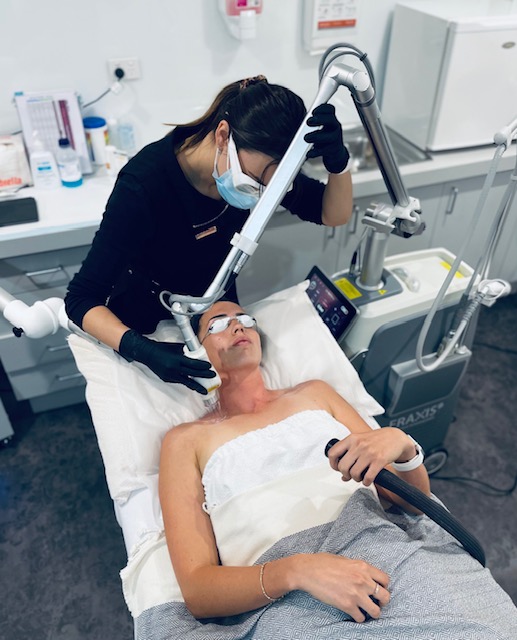
RF Microneedling vs CO2 Laser Resurfacing for Rejuvenation, Acne Scars and Stretch Marks
So, how do these two treatments stack up, and what are the key differences and similarities? To understand how the fractional CO2 laser works compared to RF microneedling, you must understand how the different technologies work. Both CO2 and RF microneedling work on the premise of creating a controlled injury to your skin by breaking down scar collagen and damaged areas.
RF Microneedling vs CO2 Laser Depth of Treatment
CO2 lasers affect the epidermis and dermis. When applied to the skin, the CO2 laser creates a controlled injury in a thin column through the total thickness of the skin. It is beneficial because it establishes collagen contraction and skin tightening. The effect on the dermis stimulates your skin to mount a repair response and lay down healthy collagen.
RF microneedling creates a more selective dermal response. In RF microneedling treatments, on the other hand, needles are inserted into the skin before radiofrequency energy is discharged. Consequently, the skin’s surface (epidermis) only receives microneedle pricks. The injury to break down scars or damaged tissue occurs at the needle tip in the dermis. Thus, the radiofrequency creates a cone of injury, with the broadest part deeper in the dermis (where the energy works). In some circumstances, this can be advantageous. However, RF microneedling creates a larger bulk of damage. With more modern drug delivery techniques aimed at delivering active ingredients deep into the dermis to alter cell metabolic pathways and action, this is detrimental.
Fractional CO2 and RF microneedling combinations can be more beneficial, except for people with darker skin types. Though RF microneedling is safe for all skin types (fair to dark), CO2 laser resurfacing should not be used on dark skin types because of the risk of hypopigmentation or hyperpigmentation after treatment. Tixel also presents a safe option for all skin types, including darker skin, however generally you will require skin preparation with a pigment inhibitor 4–6 weeks prior to treatment on all modalities.
RF Microneedling vs CO2 Mode of Action
Though both create therapeutic effects through heat, the heat is designed differently. CO2 laser resurfacing works through converting light into heat energy, whereas RF microneedling inserts small pins into the skin and discharges radiofrequency energy—both are fractionated treatments. What does this mean, and where does fractional CO2 laser resurfacing fit in?
Summary RF Microneedling vs Fractional CO2 Laser
CO2 Laser Resurfacing
- Treats both the epidermis and dermis, creating a controlled injury that stimulates collagen remodelling.
- Superior for skin tightening and scar reduction.
- Ideal for fair to medium skin tones but not recommended for darker skin due to pigmentation risks.
RF Microneedling
- Focuses primarily on the dermis, leaving the epidermis largely intact.
- Suitable for all skin types, including darker tones.
- Best for selective scar revision and moderate skin rejuvenation.
Both treatments can be combined for enhanced results, though Tixel often replaces RF microneedling for clients seeking less invasive and more comfortable resurfacing options.
Fractional CO2 vs Ablative CO2 Laser
The CO2 laser treatment was the first laser developed for cosmetic resurfacing; originally, it was fully ablative, meaning the entire surface skin was treated. Full laser skin resurfacing has had impressive outcomes. However, the incidence of side effects was the impetus for developing fractional lasers about 15 years ago. With fractional lasers, untouched skin areas surround a column of injury. This dramatically reduced the risks because the healthy skin surrounding the injured column could move in quickly and heal the surface faster, vastly reducing the chances of scarring and infection. Although fractional CO2 laser does not initially give the same dramatic results and requires repeated treatments, the results are more natural without the risks.
The first fractional technology was the Fraxel laser. Fraxel has continued to create new machines, including a CO2 laser treatment. They were the first with the most prominent brand penetration, so much so that people have used Fraxel as synonymous with fractional lasers. However, there is now a broad range of fractional CO2 lasers.
Why Choose Pearl Medispa?
At Pearl Medispa, we take a holistic approach to skin health, emphasising slow ageing, prejuvenation, and rejuvenation. Our treatments are designed to optimise skin health through barrier repair, address oestrogen-deficient skin changes, and harness regenerative medicine technologies, including:
- Tixel with Drug Delivery: Advanced heat-based technology for skin resurfacing and improved absorption of active ingredients.
- Rejuran and Exosomes: Cutting-edge regenerative treatments that stimulate collagen and skin repair.
- Collagen Biostimulators and Skin Boosters: targeted treatments to restore elasticity, hydration, and firmness.
With a focus on innovation and personalised care, Pearl Medispa is dedicated to helping you achieve radiant, healthy skin at every stage of life. Contact us today to discuss the best treatment options for your needs.
Our laser and skin nurse, Christine, offers a free assessment at the onset. They assess which resurfacing approach is best for you. Please book online or call 07 3350 5447 for a complimentary consultation.
